
How can we recycle more plastic and prevent it from ending up in incinerators? Over the next four years, a consortium of researchers from Utrecht University and partners spanning the entire plastics recycling chain will work together to address this challenge. Through the CLEAN project, they will identify and tackle key bottlenecks in the chemical recycling process, helping to advance a more circular plastics economy. The consortium has been awarded 1.5 million euros in funding through the National Growth Fund Programme Circular Plastics NL.
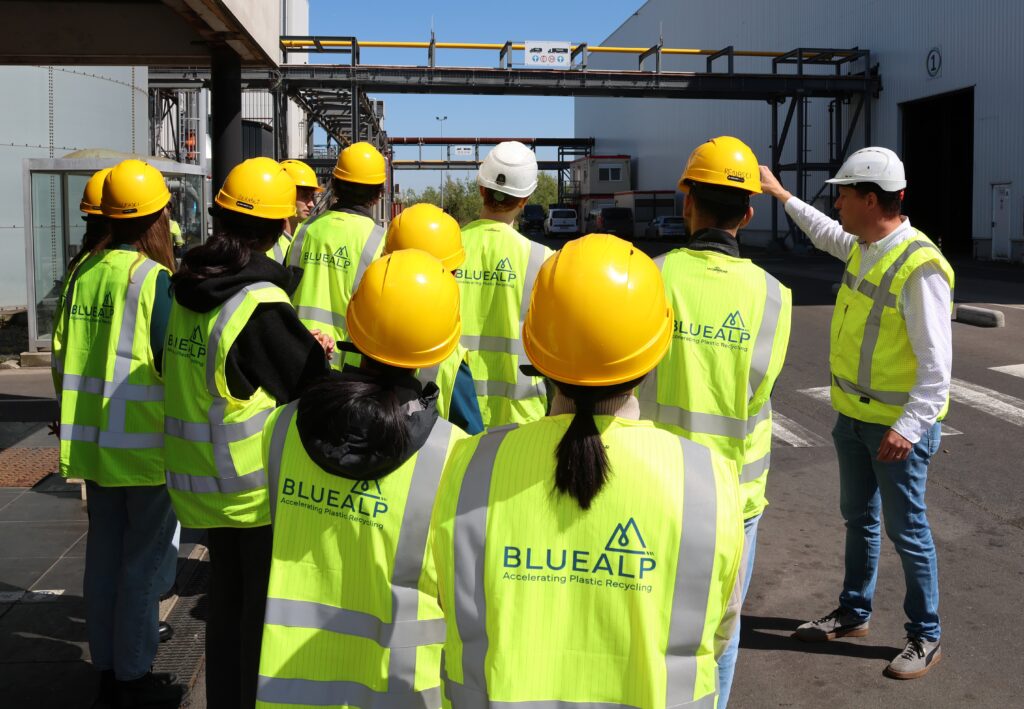
Visiting Renewi in Ghent and BlueAlp in Ostend was a real eye-opener for Professor Bert Weckhuysen and his team. “It is only when you see it firsthand that you realise the true complexity of recycling,” he says. “The volume of plastic is enormous, while the waste stream itself is highly diverse and often heavily contaminated. That makes it a fascinating challenge to translate our scientific expertise into practical solutions and contribute directly to a circular economy.” The visits also generated great enthusiasm among the PhD candidates and postdoctoral researchers. They not only gained a deeper appreciation of the challenge but were also inspired to help develop solutions.
Cheese packaging
The site visits are part of the CLEAN (Catalytic Low-temp Efficiency for Advanced decontaminatioN) project, a collaboration between researchers and industry partners aimed at improving plastic recycling. The project’s goal is to increase the amount of plastic that can be reused and reduce the volume sent for incineration. The focus is on thin polyolefin films, widely used in horticulture and packaging, which are particularly challenging to recycle due to contamination and the presence of additives that provide specific functional properties.
“Working closely with industry gives us direct insight into real-world challenges, and enables us to apply our scientific expertise where it can have the greatest impact”
One of the main challenges in recycling polyolefin films is a thin layer of ethylene-vinyl alcohol (EVOH), commonly used in food packaging to extend shelf life. While highly effective in preserving products such as cheese, EVOH complicates the pyrolysis process because of its high oxygen content, which can reduce the quality of the new plastics, after recycling. Since current pyrolysis technologies cannot efficiently remove this layer, many packaging materials contain too much EVOH and are therefore often incinerated instead.
Real-world challenges
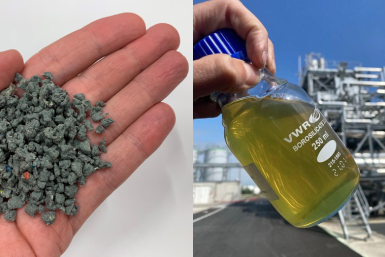
The project is led by researchers from Utrecht University in close collaboration with partners spanning the entire plastics recycling chain. These include Renewi, which collects, sorts and processes plastic waste into flakes, BlueAlp, which converts these into pyrolysis oil, and Shell, which uses this oil as a feedstock to produce new plastics and chemicals. “Working closely with industry gives us direct insight into real-world challenges,” says Weckhuysen. “It enables us to apply our scientific expertise where it can have the greatest impact.”
Track record
Catalysts and adsorbents are at the heart of the CLEAN project’s approach to improving plastic recycling. Catalysts accelerate and steer chemical reactions, making it possible to separate and process plastics at lower temperatures and with reduced energy consumption. Adsorbents, meanwhile, capture unwanted substances on their surface, helping to remove contaminants from plastic waste streams. The project aims to develop new catalyst and adsorbent materials specifically designed to address critical bottlenecks in existing industrial recycling processes.
“Having a knowledge partner with deep expertise in this field is extremely valuable”
Kim Meulenbroeks, innovation manager at Renewi
This focus on plastic recycling reflects a broader shift in Weckhuysen’s research. While his group has a long-standing reputation for developing catalysts that convert fossil and renewable feedstocks into fuels, chemicals and materials, its research increasingly targets catalytic processes for the conversion of CO₂, non-edible biomass and plastic waste into new products.
Across the value chain
What makes the project particularly distinctive is the close collaboration between all partners across the entire value chain. While the organisations had already been in contact for some time, the partnership has now become more structured and goal oriented. “The project is clearly defined, and with the support of the grant, participation is no longer a casual commitment,” says Kim Meulenbroeks, innovation manager at Renewi. “I expect developments developments will widen the variety of waste plastics suitable for pyrolysis. Therefore increasing recycling volumes and lowering the amount of plastic waste going to incineration.”
Valentijn de Neve, CEO of BlueAlp, also sees strong potential: “Looking across the value chain where to most efficiently remove contaminants, will yield much better results than looking at it in isolation.”
According to the partners, the expertise of the Utrecht chemists is essential. Their fundamental knowledge of catalysts and adsorbents provides the scientific foundation the project requires. “For us, this is a completely new development. Having a knowledge partner with deep expertise in this field is extremely valuable,” says Meulenbroeks.
De Neve adds: “Chemical recycling is happening at scale, and we are now looking at the next challenge that comes with scale. We have a strong consortium in place with complementary capabilities that will look at managing contaminants in an even more efficient manner. Together we will focus on targeting an even wider variety of plastic waste, significantly reducing what is currently incinerated.”
This article was originally written by Moniek Verstegen, published on the Utrecht University website and has been republished here with reference to the original source:
(EN) Science and industry join forces to improve plastic recycling – News – Utrecht University
(NL) Wetenschap en industrie bundelen kracht voor betere plasticrecycling – Nieuws – Universiteit Utrecht