
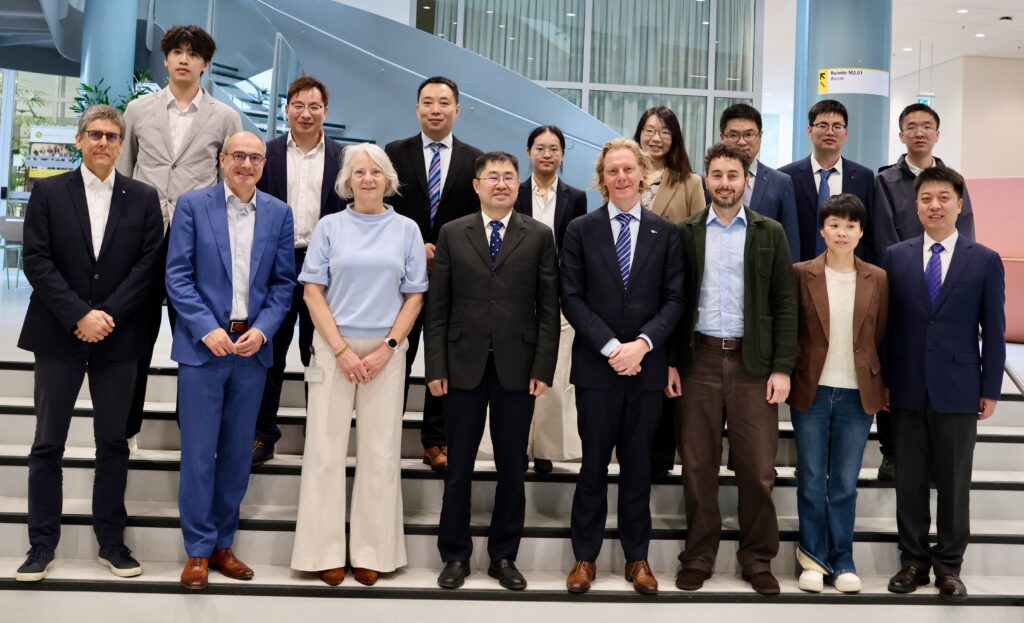
A delegation from East China University of Science and Technology visited Utrecht University on 11 and 12 June 2026, bringing together senior representatives, researchers and international officers from both institutions to strengthen a partnership built around sustainable and circular chemistry. Over two days in Utrecht, the visit combined formal speeches, scientific exchange and a tour of laboratory facilities, with one clear message running through the programme: long-term collaboration depends not only on excellent research, but also on trust, mobility and shared responsibility.
The visit took place in the context of the ECUST-Utrecht Joint Research Centre, a collaboration between East China University of Science and Technology in Shanghai and Utrecht University. The centre connects research groups working on catalysis, reaction engineering and sustainable chemical processes, with particular attention to biomass and waste plastics conversion, sustainable catalyst development and the study of catalysts under realistic conditions.
The delegation was welcomed by Professor Wilco Hazeleger, rector magnificus of Utrecht University, who placed the visit within a broader view of the university’s public mission. Science, he suggested, should not remain behind closed doors. It must be brought into society, made visible and shared with wider publics. To illustrate this, he referred to the 19th and 20th-century glass artists Leopold and Rudolf Blaschka, whose extraordinary glass models of plants and sea life became part of natural history museum collections. Their work, at once scientific and artistic, showed how knowledge can be made tangible, memorable and open to public imagination.
That idea of science as something to be shared, not merely produced, resonated throughout the visit. The challenges discussed by the two universities (climate change, biodiversity loss, circular use of resources and sustainable development) are not abstract academic questions. They are social questions, economic questions and generational questions. They demand chemistry that can move from fundamental understanding to practical application, and partnerships that can carry knowledge across borders.
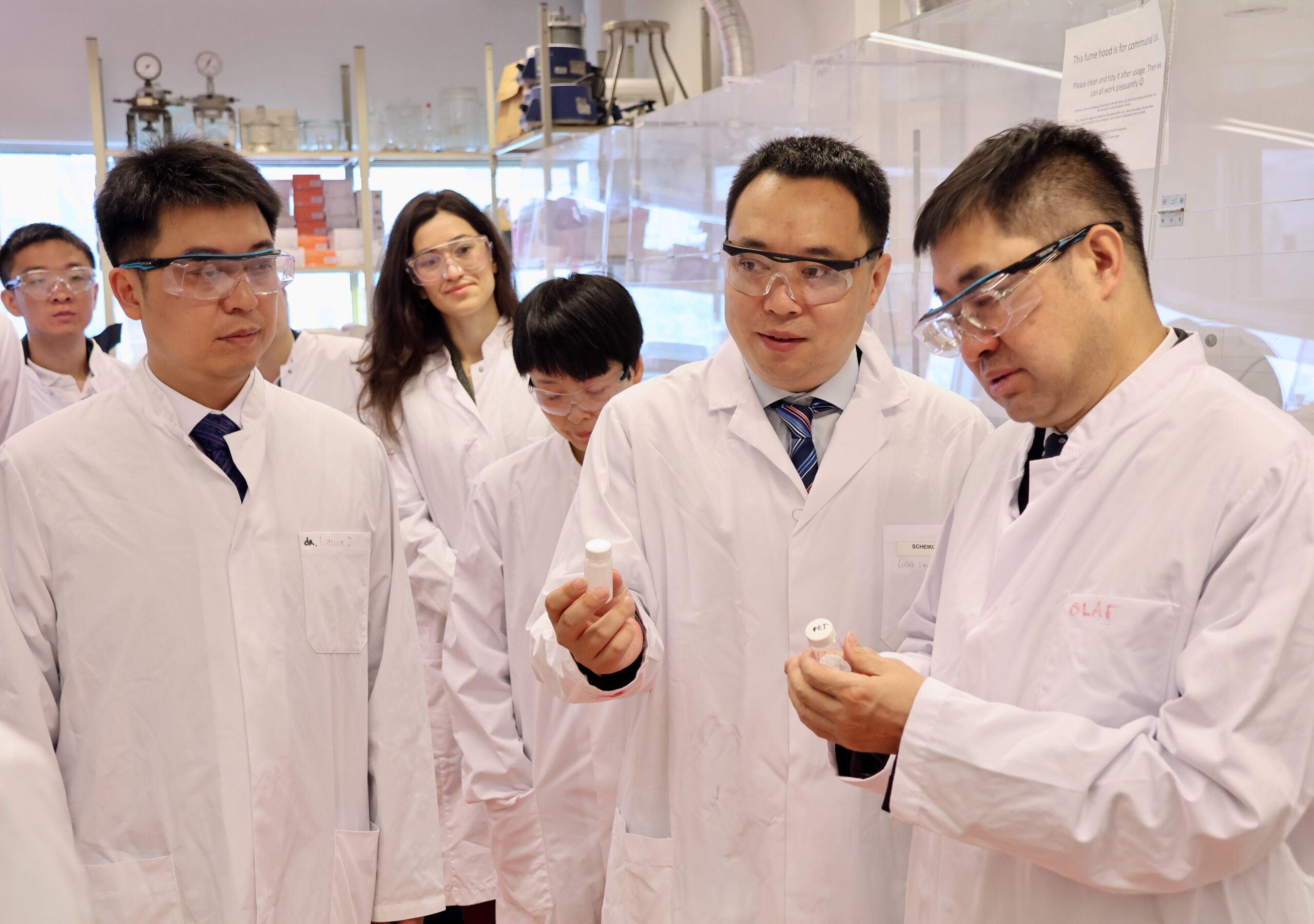
Professor Chuanhai Jiang, chairman of the University Council at ECUST, led the visiting delegation. In his opening remarks, he thanked Utrecht University for its hospitality and described the visit as an opportunity to deepen an already fruitful relationship. ECUST, he said, values Utrecht University’s international reputation in catalysis, biomolecular research and sustainable chemistry, and sees it as a key partner for academic exchange and international cooperation.
Professor Jiang also reflected on ECUST’s own development. The university, he said, is committed to working across disciplines, strengthening its global outlook and aligning scientific progress with sustainable and economic development. Since the establishment of the joint research centre, he noted, collaboration between the two institutions has already produced meaningful results. Professor Bert Weckhuysen’s role as an honorary professor at ECUST was mentioned as one example of the scientific ties that have helped shape the partnership, particularly in areas such as plastic recycling and catalytic conversion.