
Utrecht University researchers Bert Weckhuysen and Karin Rebel have been awarded the prestigious Comenius Leadership Fellow grant to develop an education programme for students who want to play an active role in the sustainability transition. The programme will bring together science, art and professional practice, in collaboration with HU University of Applied Sciences Utrecht and HKU University of the Arts Utrecht. Often regarded as the ‘VICI of educational fellowships’, the Comenius Leadership Fellowship is awarded annually by the National Knowledge Institute for Education (NKO).
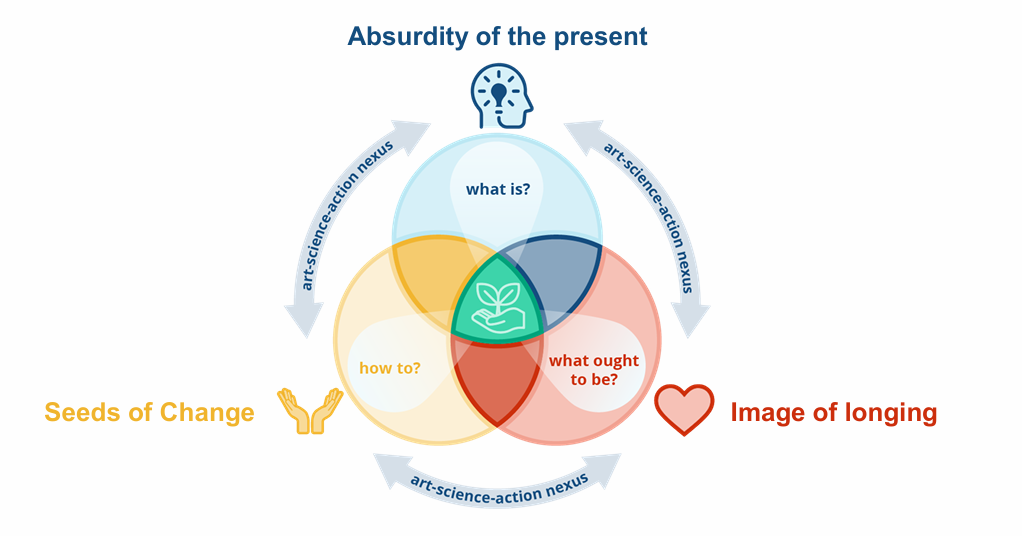
Lasting sustainability transitions require professionals with a unique combination of knowledge and skills. They must not only shape these transitions, but also set them in motion and drive them forward. This calls for a training programme that brings together various learning objectives: students must not only develop the right knowledge and practical skills, but also adopt an appropriate attitude. The researchers describe this combination as the intersection of art, science and action.
“Students who work together to investigate, tackle and visualise real sustainability issues – that is the connection between head, hands and heart in practice”
Karin Rebel, Professor of Sustainability Science & Education at the Faculty of Geoscience
Training transition experts
The initiators of the ‘ARTiST: Advancing Resilience through Transformative Sustainability Training’ project will use the half-million-euro grant to develop an educational programme that trains these multidisciplinary transition experts. The project will run for three years and is led by Karin Rebel, Professor of Sustainability Science & Education at the Faculty of Geosciences, and Bert Weckhuysen, Distinguished University Professor of Catalysis, Energy and Sustainability at the Faculty of Science.
A unique collaboration
One of the things that makes this project special is that three different educational institutions are collaborating on this pressing issue. According to Weckhuysen, this is precisely what training transition experts requires. “You need science, creativity and practical experience to train the next generation of researchers, policymakers and entrepreneurs who can truly tackle sustainability issues and make a real impact on society.”
Rebel adds: “Students who work together to investigate, tackle and visualise real sustainability issues – that is the connection between head, hands and heart in practice. With the three Utrecht educational institutions – Utrecht University, University of Applied Sciences Utrecht and HKU University of the Arts Utrecht – we are making that integration structural and accessible to everyone.”
Skills as a driver of change
The training programme consists of three consecutive components. The first pillar is the Utrecht Sustainability Skills Academy for Green Excellence (USSAGE). It comprises various modules in which all students can participate.
The modules focus on developing skills that are often neglected in standard degree programmes. These include personal and normative competencies, as well as practical skills in the field of sustainability, such as storytelling for change and urban gardening. According to the organisers, this is important because such skills are the driving force behind change. People are more easily inspired by recognisable, practical matters.
“We are training students who have the skills, creativity and agency to actively shape and accelerate sustainability transitions,”
Practising with real-world challenges
The second pillar involves strengthening challenge-based learning (CBL) through the Utrecht Sustainable Futures Project (USFP). CBL revolves around tackling existing societal issues and is therefore ideal for students to put new knowledge and skills into practice. Together with existing initiatives, the laureates are exploring whether they can redesign parts of the courses to integrate the art-science-action nexus.
The third component of the educational programme involves a collaboration with existing minors. This explores how the ARTiST programme can be integrated, resulting in the establishment of the Utrecht Sustainable Futures Minor (USFM). This brings together various skills modules and CBL projects. Students following existing minors, such as Sustainable Futures (Utrecht University), Art & Ecology (HKU University of the Arts Utrecht) and Impact – societal change by creativity (University of Applied Sciences Utrecht), can then integrate these components into their programme.
More than just a degree
With this educational programme, the organisers are breaking down the traditional boundaries between universities of applied sciences, universities and art schools, thereby facilitating different perspectives on impact to reinforce one another. The collaboration between Utrecht University, University of Applied Sciences Utrecht and HKU University of the Arts Utrecht creates a learning environment where academic knowledge, practice-oriented education and creative approaches come together. “In this way, we are training students who not only have a degree, but also the skills, creativity and agency to actively shape and accelerate sustainability transitions,” says Weckhuysen.
This article was originally written by Moniek Verstegen, published on the Utrecht University website and has been republished here with reference to the original source: