
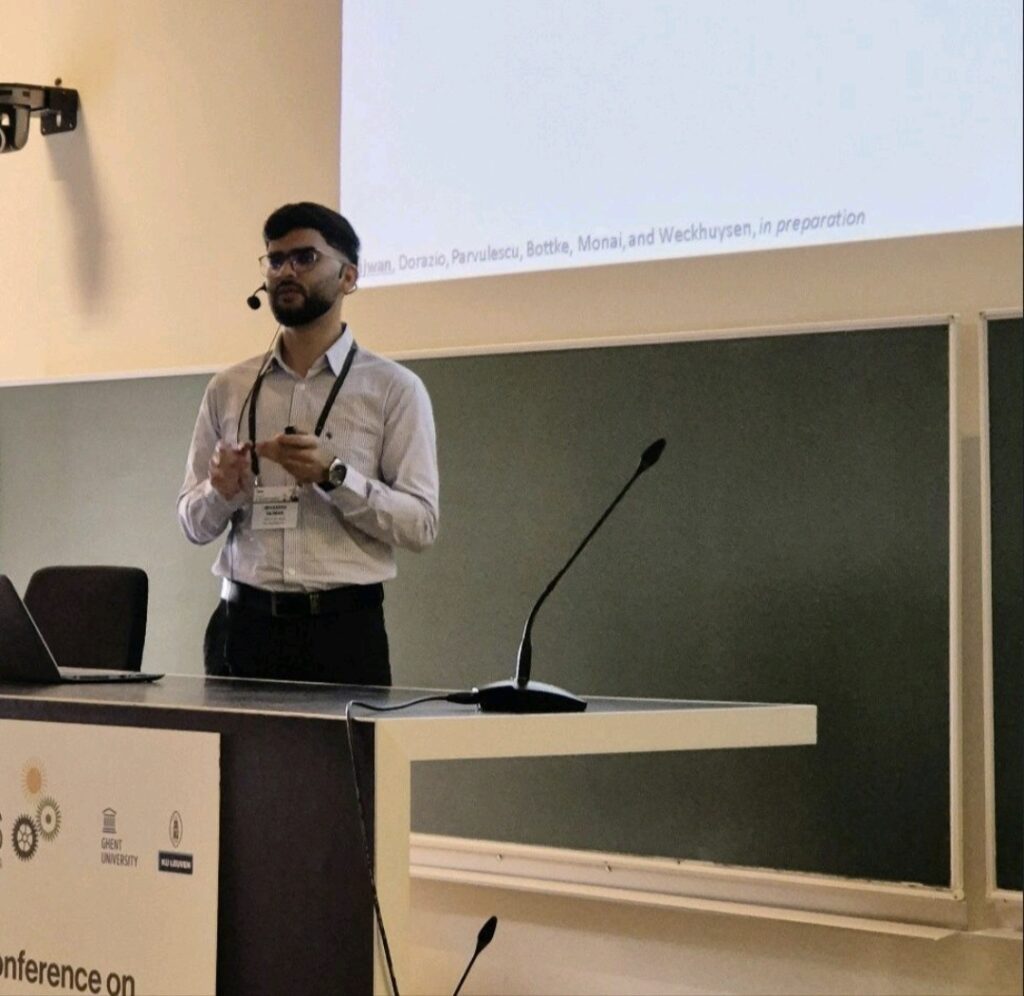
Lignin is one of the most abundant natural materials on Earth, it is found in the cell walls of plants and helps give wood its strength. For chemists, however, it is still a stubborn puzzle: rich in useful carbon structures, but difficult to break apart with precision. This challenge was at the heart of the presentation by Utrecht University PhD candidate Devanshu Sajwan, who won the Royal Society of Chemistry (RSC) Green Chemistry “Best PhD Talk” award at the 22nd Renewable Resources & Biorefineries (RRB) conference in Leuven, Belgium.
Sajwan received the award for his talk on zeolite-catalysed lignin pyrolysis for the production of aromatics. In simpler terms, his research, which is supervised by Bert Weckhuysen and Matteo Monai, looks at how carefully designed catalysts can help convert lignin into valuable chemical building blocks. Aromatics are used throughout the chemical industry, but they are still largely produced from fossil resources. Finding renewable routes to these molecules is one of the major questions in the transition towards a more sustainable chemical sector.
The Renewable Resources & Biorefineries conference brings together scientists working on biomass, green chemistry, bio-based materials and alternatives to fossil feedstocks. It is a field driven by a deceptively simple question: how can society keep producing the chemicals and materials it needs, while using resources more carefully?
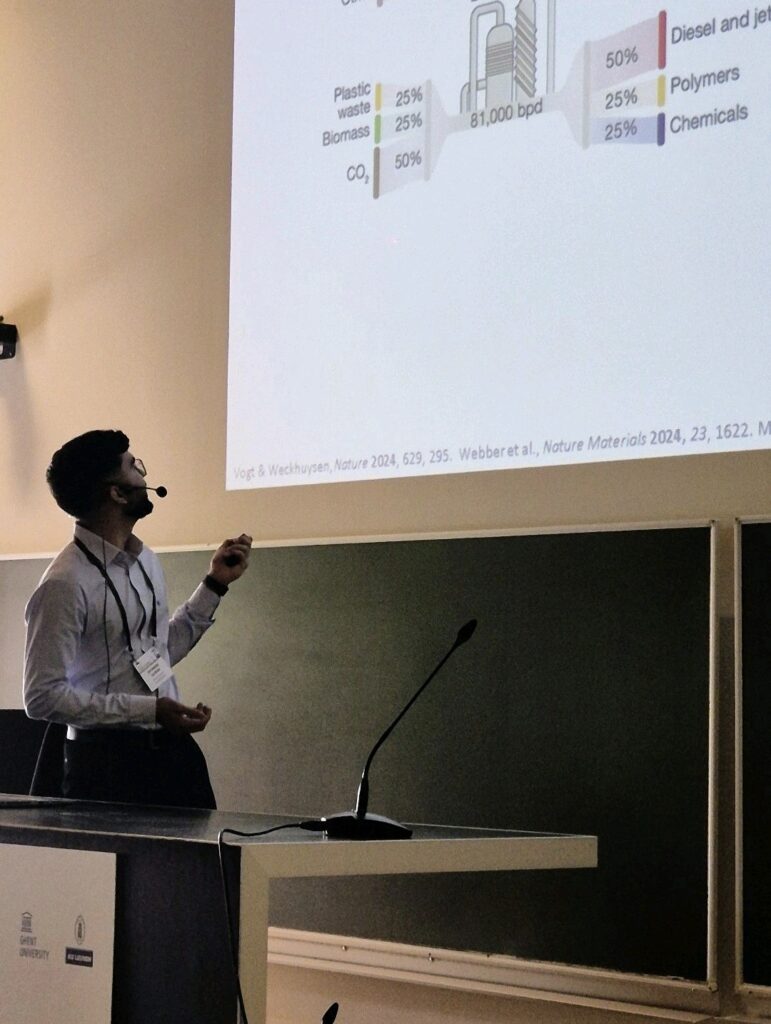
For young researchers, conferences such as RRB offer an important space to test ideas, meet peers and place their work within an international community. Sajwan described the experience as a memorable one, noting that it was his first oral presentation at an international conference as well as his first award.
The recognition is also a reminder that sustainable chemistry depends on the next generation of scientists. The shift away from fossil feedstocks will not be achieved by a single breakthrough, but by many advances in catalysis, reaction engineering, materials science and process design. Each improvement in understanding brings the field closer to chemical routes that are cleaner, more selective and more circular.
For Utrecht University, the prize highlights research that connects fundamental catalysis with one of society’s most pressing challenges: how to make better use of the carbon already available in nature and in waste streams. Sajwan’s work on lignin conversion contributes to that wider effort by asking how difficult renewable materials can be transformed into useful molecules without losing sight of the underlying chemistry.