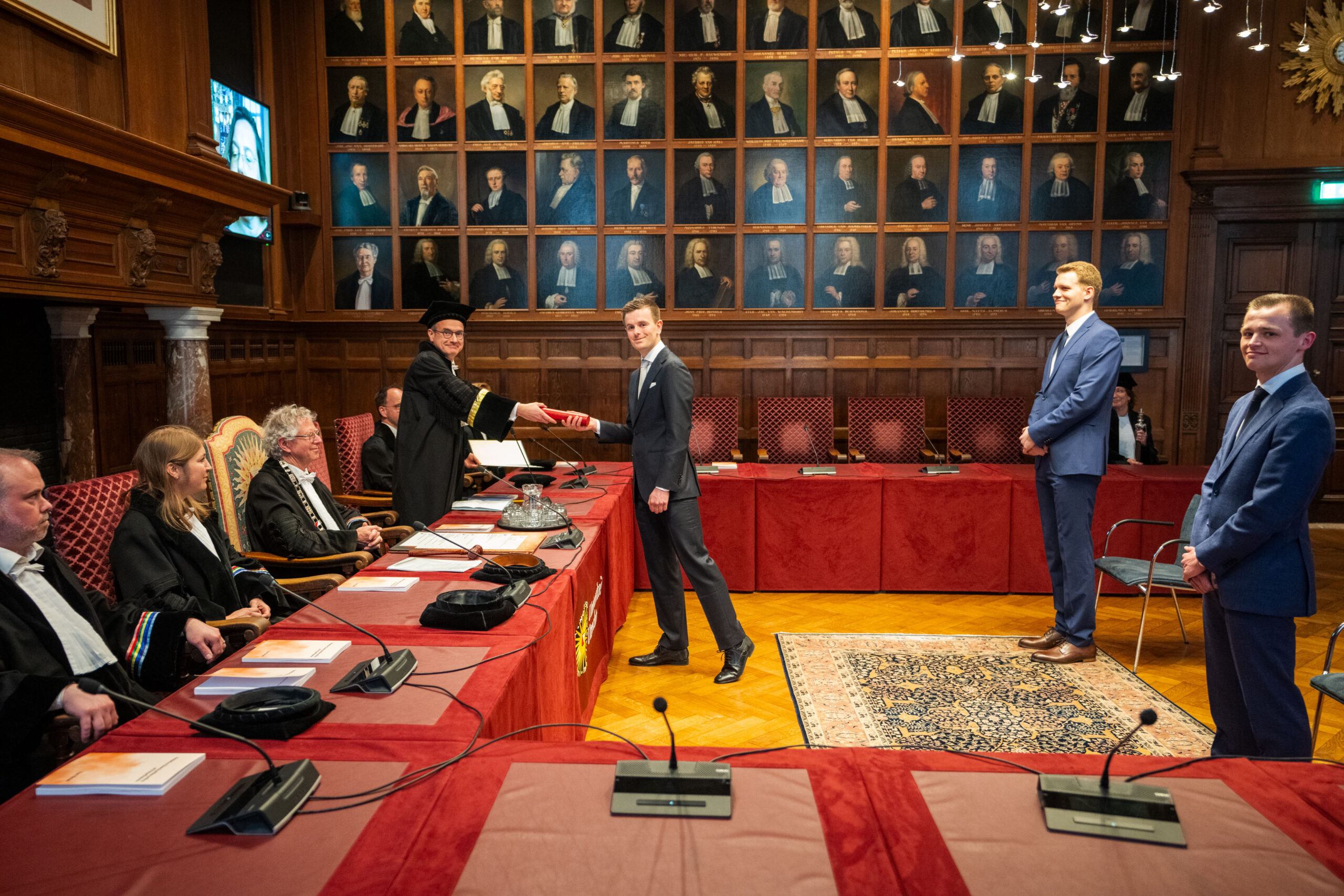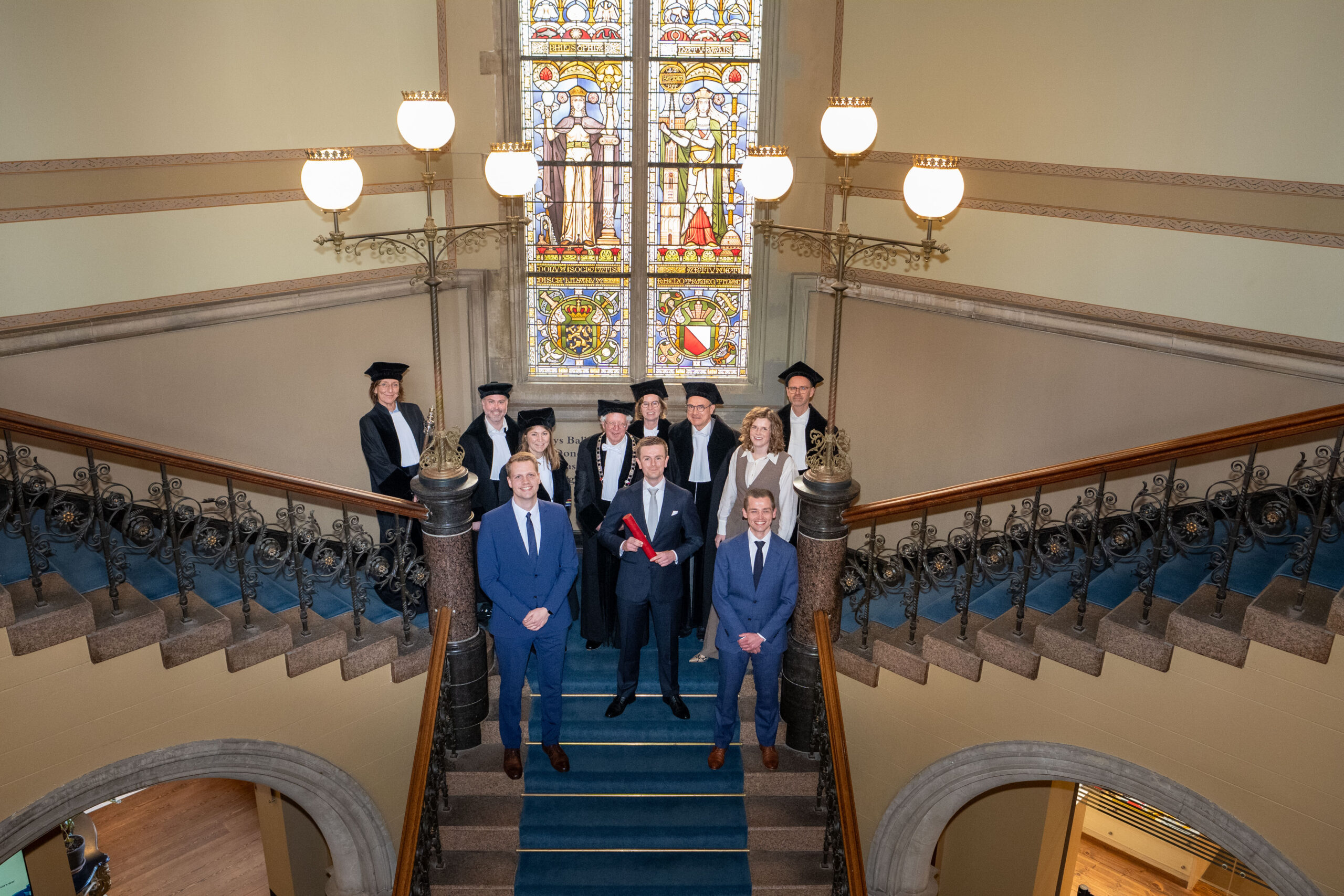
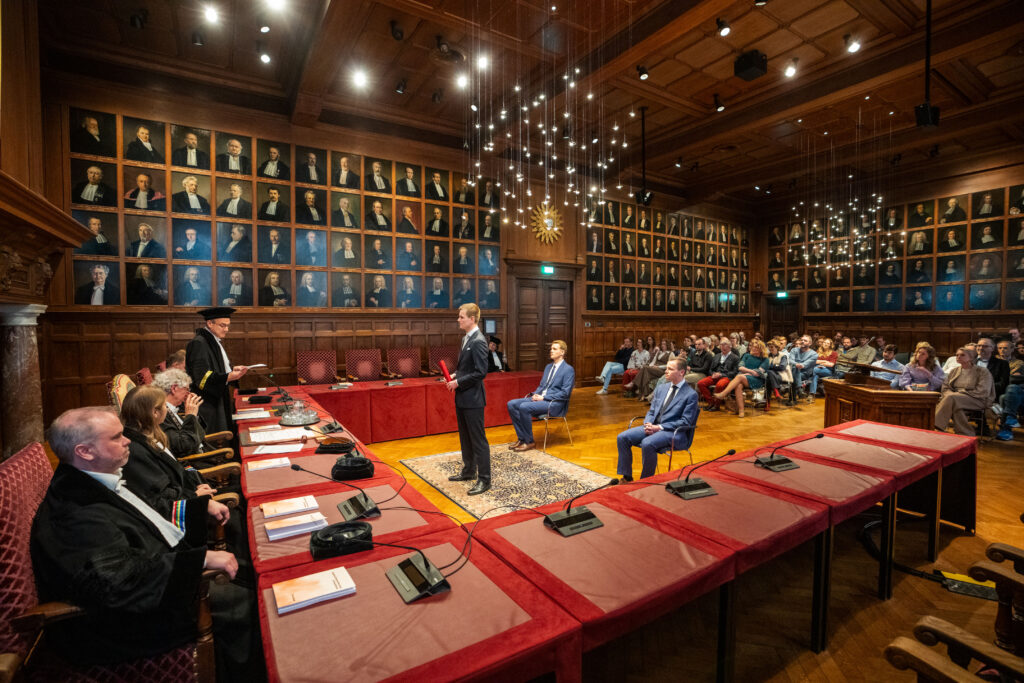
Congratulations to Dr. Thom Smak on a successful PhD defense, during which he defended his PhD thesis, supervised by Prof. Bert Weckhuysen and Dr. Ina Vollmer.
In his PhD thesis, Thom addressed a central challenge in sustainability science: how can we recover value from plastic waste rather than landfilling or incinerating it? His work focuses on the chemical recycling of polyethylene — the world’s most widely produced plastic — through selective oxidation, converting the polymer into dicarboxylic acids that find direct use in materials such as nylon and other textiles.
A major contribution of Thom’s work was the development of advanced analytical methods to map the reaction in detail. By combining multiple complementary spectroscopic and chromatographic techniques, he identified key reaction intermediates along the pathway from polyethylene to dicarboxylic acids. This mechanistic insight moved the field beyond trial-and-error optimization, enabling rational design of improved reaction conditions.
Building on this mechanistic understanding, Thom achieved a significant boost in reaction performance. Through the addition of copper and vanadium metal salts in the presence of O₂/NO, dicarboxylic acid yields were pushed beyond 50% — a substantial improvement over prior state-of-the-art results. Crucially, he also demonstrated that comparable yields are attainable starting from heavily contaminated post-consumer plastic waste, underscoring the practical robustness of the approach.
In the final part of his thesis, Thom showed that the mixture of dicarboxylic acids produced by oxidative recycling can be used directly as feedstock for polyester synthesis, without requiring energy-intensive purification steps. This finding substantially improves the overall sustainability profile of the process and brings oxidative chemical recycling closer to industrial viability.
Together, these results establish oxidative chemical recycling of polyethylene as a promising and practically relevant route toward a circular plastics economy.
Thom’s full thesis can be read here.